How Much Does a TV Commercial Cost to Produce?
How much does a TV commercial cost to make? Less than most brands fear, and more than most first budgets allow.
Key Highlights
- A TV commercial has two separate budgets: production (making the ad) and media (paying for airtime or impressions).
- Production cost depends on scope, not runtime, so a simple 30-second spot can cost far less than an ambitious 15-second one.
- Crew, shoot days, locations, talent, post-production and music are the biggest cost drivers.
- Union talent and music rights add usage fees that grow with how long and where the ad runs.
- Streaming TV campaigns need extra versions and cutdowns, so plan those into the production budget from day one.
Here’s what drives TV commercial production cost and how to budget for it.
How Much Does a TV Commercial Cost?
Every TV commercial comes with two separate costs.
Production cost is what you pay to make the commercial: concept, crew, talent, editing and delivery. You pay it once, though rights may need renewing.
Media cost is what you pay to run it, whether that’s a 30-second slot on a local station or a CPM on streaming TV. You pay it every time the campaign runs.
This post covers production. For airtime rates, CPMs and Super Bowl pricing, see our TV advertising costs guide.
What Drives TV Commercial Production Cost
Scope sets the budget, and a few line items drive most of it.
Concept and scripting: an agency or creative team develops the idea, script and storyboards before anything is filmed.
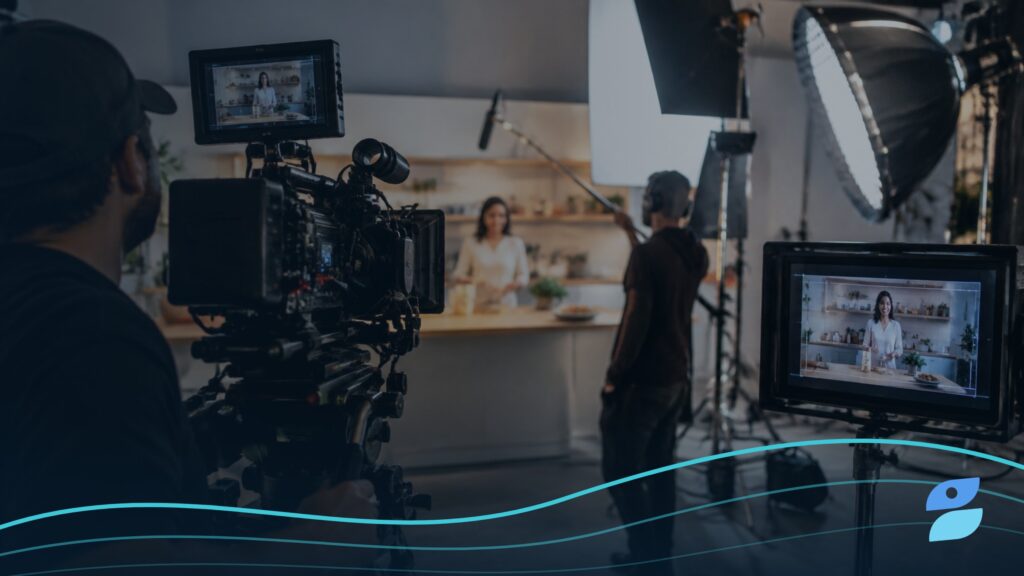
Crew and equipment: director, camera, lighting and sound crews are usually billed by the day, along with gear rental.
Shoot days and locations: every extra day or location adds crew time, permits and travel. Studio shoots are typically cheaper than on-location shoots.
Talent: actors, voiceover artists and extras, with union talent adding usage fees on top of session pay.
Post-production: editing, color, sound mix, graphics and animation. Heavy visual effects can rival the cost of the shoot itself.
Music: stock music is inexpensive, while licensed tracks and original scores cost far more.
A single-location shoot with a small crew and stock music sits at one end of the range. A multi-day shoot with celebrity talent and a licensed song sits at the other.
How Much Does a 30-Second Commercial Cost to Make?
There’s no standard price, but published ranges give a useful starting point.
According to DesignRush’s TV advertising cost guide, simple single-location ads run about $10,000 to $50,000 to produce. High-concept spots with elaborate sets, effects and multiple locations can pass $1 million.
Most brands land somewhere in between, depending on three choices:
- Live action or not: animation, motion graphics and existing footage can cost less than a full shoot
- Union or non-union talent: union talent brings session fees plus ongoing usage payments
- In-house or agency: a full-service agency adds strategy and creative fees, while an in-house team or a production company alone can cost less
Length matters less than you’d expect. A 15-second spot with the same crew, cast and locations costs nearly as much to shoot as a 30-second one.
Talent and Usage Rights Add Up
Talent fees don’t always end when the shoot wraps.
Union actors on national campaigns work under the SAG-AFTRA Commercials Contracts, which pay a session fee for the shoot plus use fees based on where and how long the ad runs. Under the 2025 SAG-AFTRA Commercials Contracts, wages and use fees rise 5% in year one, 4% in year two and 3% in year three.
The same contract sets a 52-week streaming cycle of $10,000 for on-camera principal performers. So a spot that adds streaming TV to its media plan can also add talent costs.
Music works the same way. A licensed track may be cleared only for certain channels or time periods, so extending a campaign can mean paying again.
Budgeting Creative for Streaming TV
Streaming TV changes what a production needs to deliver.
More versions: many CTV buys use :15 and :30 spots, and some placements call for :06 bumpers. Shooting with cutdowns in mind is cheaper than recutting later.
Rotation and testing: streaming lets you rotate creative by audience and measure which version performs. Two or three variants from one shoot give you room to test.
Technical specs: streaming publishers and DSPs have their own file and loudness specs. Build final delivery into the post-production budget so files aren’t rejected at launch.
Rights for streaming use: confirm that talent and music agreements cover streaming before the spot runs there.
Our guide to OLV advertising vs. CTV covers how creative needs differ by screen.
How to Keep Production Costs in Check
A few planning habits keep production budgets under control.
- Lock the script early: changes on set are the most expensive changes
- Shoot once, cut many: plan :30, :15 and :06 versions in a single shoot
- Consolidate locations: fewer company moves mean fewer crew hours
- Negotiate usage up front: buy the talent and music rights you need for your full media plan
- Reuse assets: existing footage, product shots and brand graphics can stretch a smaller budget
If you’re working with an agency, our guide on how to choose a TV ad agency lists the questions to ask about creative fees.
Getting More From Every Production Dollar
The best spot in the world only pays off if it runs where real viewers see it.
On streaming TV, the same CPM can buy very different impressions. Some inventory sold as TV plays on phones or passes through several resellers, which wastes media dollars and the creative they carry. Our CTV audience targeting guide shows how to put that creative in front of the right households.
That’s where we focus. Ichiro, our CTV curation platform, packages premium streaming inventory across SSPs into curated deals you activate in the DSP you already use. So your commercial lands on real TV screens.
The Bottom Line
How much does a TV commercial cost? It depends far more on scope than on length.
Separate your production and media budgets, then plan for crew, talent, post-production and music. Build in usage rights and streaming cutdowns from the start, because adding them later costs more. And once the spot is made, make sure your media puts it on screens that count.
Ready to get your next spot in front of the right viewers? Talk to our team about curated streaming TV deals.
Frequently Asked Questions
How much does a TV commercial cost to make?
TV commercial production cost depends on scope. Published industry ranges put simple, single-location spots at about $10,000 to $50,000, while high-concept national ads with elaborate sets and effects can pass $1 million. Crew, shoot days, locations, talent, post-production and music drive the final number, along with any union usage fees.
How much does a 30-second commercial cost?
A 30-second commercial has two costs: production and airtime. Production often runs from tens of thousands of dollars for a simple spot to seven figures for a high-concept ad. Airtime depends on the market, network and season, from a few hundred dollars per local spot to millions for the Super Bowl.
Do actors get paid every time a commercial airs?
Union actors under the SAG-AFTRA Commercials Contracts earn a session fee for the shoot plus use fees tied to where and how long the ad runs. Broadcast network use is paid per use within 13-week cycles, while streaming, cable and digital use have their own rates. Non-union talent is usually paid a negotiated flat buyout.
Is a streaming TV ad cheaper to produce than a traditional TV ad?
Not necessarily. Streaming TV ads use the same production process as traditional TV spots, so the shoot costs about the same. Streaming can add costs for extra cutdowns, creative variants and file delivery, and union talent earns separate streaming use fees. The savings usually come on the media side, where you can start with smaller budgets.

Jake Gardner
The founder and CEO of Splash Bay Media, Jake has over 15 years of experience in digital marketing and ad tech. He’s built, scaled, and exited high-performance teams, products, and data-driven solutions that help advertisers and media partners succeed in an increasingly complex digital landscape. At Splash Bay, he leads the company’s strategic vision and growth, focusing on innovative traffic-shaping solutions, advanced analytics, and transparent supply-path optimization to drive efficiency, performance, and scale. He works closely across marketing, sales, client services, product, and finance to ensure we deliver measurable results and long-term value for our clients.