How Roku Ads Work: A Guide for Advertisers
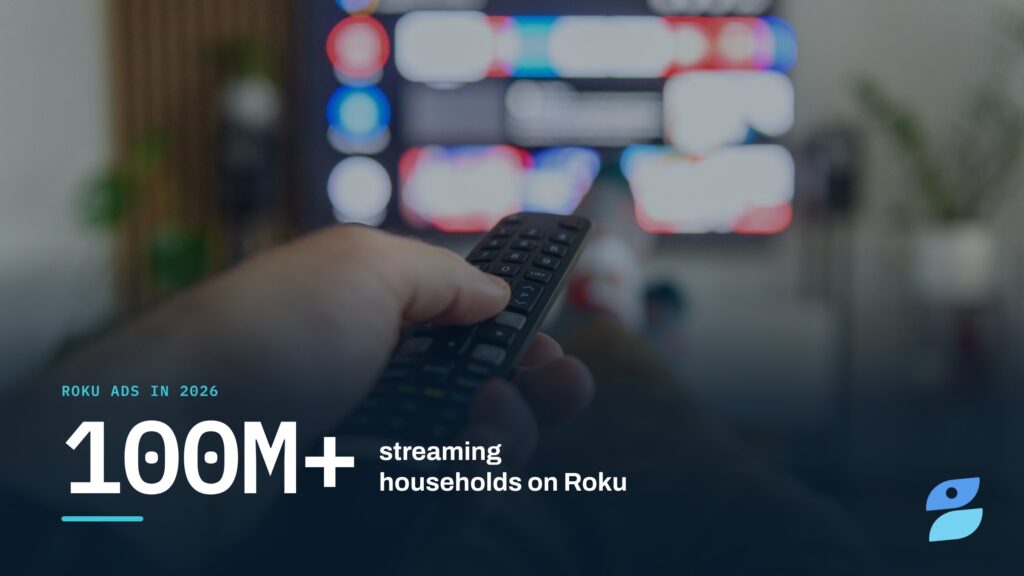
Roku ads reach viewers before, during, and around what they stream, from the home screen to The Roku Channel to thousands of apps on the platform.
Key Highlights
- Roku passed 100 million streaming households worldwide in April 2026, making it one of the largest TV platforms advertisers can buy.
- Roku advertising spans the home screen, The Roku Channel and ad inventory inside apps running on Roku devices.
- Targeting draws on Roku’s first-party viewing data, including what households watch across the platform.
- You can buy Roku ads three ways: self-serve through Roku Ads Manager, directly with Roku, or programmatically through major DSPs.
- Ad spend through third-party DSPs grew more than 40% year over year in Q1 2026, so programmatic is now a core way to buy Roku.
Here’s how each piece works and how to choose the right way in.
Why Roku Matters to Advertisers
Roku is the operating system many US households use to reach every streaming app they watch.
That position gives Roku scale and data few platforms match. The company reported 38.7 billion streaming hours in Q1 2026, up 8% year over year, and passed 100 million streaming households worldwide in April 2026, according to Roku’s Q1 2026 results.
For advertisers, that means two things: a large, engaged audience on TV screens and viewing data that spans many apps instead of just one.
Where Roku Ads Appear
Roku ads show up in three main places.
The home screen: the first thing viewers see when they turn on the TV. Roku says about 125 million people a day see it. The main unit is the Marquee ad, which takes up roughly a third of the screen.
The Roku Channel: Roku’s own free, ad-supported streaming service with movies, shows, and live channels. It sells video ad breaks much like any AVOD or FAST app.
Apps on the platform: many publishers running on Roku devices share ad inventory with Roku, which sells it alongside its own.
Home screen inventory is unique to Roku. Video ads in The Roku Channel and partner apps work much like other CTV ad breaks.
Roku Ad Formats
Roku TV ads come in a few core formats.
- Video ads: standard non-skippable spots, usually 15 or 30 seconds, in The Roku Channel and partner apps
- Home screen ads: the Marquee unit, which supports video and autoplay since Roku’s May 2026 home screen redesign
- Screensaver ads: branded placements that appear after a period of inactivity, including the interactive Roku City screensaver
- Sponsorships: home screen takeovers and branded moments tied to premieres, launches, or holidays
- Interactive and shoppable ads: units that let viewers act from the TV, including QR codes and commerce integrations
Video is where most budgets start. Home screen ads make sense when reach and brand visibility matter more than a specific show.
Targeting and Measurement on Roku
Roku’s biggest advantage is its first-party data.
Because Roku sits at the operating system level, it can see viewing behavior across apps on its devices. Advertisers can use that to target by:
- Audience: demographic and interest segments built from Roku data
- Viewing behavior: households that watch certain genres, content types, or streaming services
- Your own data: first-party audiences matched to Roku households
- Geography: national, regional, or local markets
On measurement, Roku reports reach, frequency, and completion, plus outcome studies tied to site visits and sales. Plan your KPIs before launch with our guide to setting goals in CTV advertising.
How to Buy Roku Ads
There are three main ways to start advertising on Roku.
Roku Ads Manager: Roku’s self-serve tool for small and mid-size advertisers. You upload creative, choose audiences, and set a budget yourself. Our beginner’s guide to Roku Ads Manager walks through setup step by step.
Direct with Roku: larger brands work with Roku’s ad sales team on custom packages, home screen placements, and sponsorships.
Programmatic: buy Roku inventory through a DSP you already use. Roku inventory is available through Amazon DSP, The Trade Desk, Google DV360, Yahoo, and FreeWheel. In Q1 2026, Roku said ad spend through these partners grew more than 40% year over year.
Amazon DSP is the deepest of these integrations. Under a partnership announced in June 2025, Amazon DSP buyers can reach Roku inventory alongside Prime Video and Fire TV, which the companies say covers about 80% of US CTV homes.
For agencies running multi-platform CTV campaigns, programmatic is usually the simplest way to add Roku without a separate workflow.
How Much Do Roku Ads Cost?
Roku advertising cost depends on how you buy and what you buy.
Self-serve: Ads Manager lets advertisers start with smaller budgets and set their own spend.
Direct: home screen placements and sponsorships are priced as custom packages and typically need larger commitments.
Programmatic: you pay a CPM, which varies by targeting, deal type, and season.
Roku doesn’t publish a public rate card, so treat any single CPM you see quoted as a rough guide. Compare Roku against other streaming options on cost per completed view and reach, not CPM alone.
Getting More From Roku in a Programmatic Plan
Roku works best as one part of a broader CTV plan, not a standalone buy.
When you buy Roku programmatically, keep supply paths short and check who’s selling each impression. Our trader’s guide to supply path optimization shows what to look for.
PubHub, our CTV planning platform, lets you plan Roku alongside other premium apps and live events and estimate reach before you commit. Ichiro, our CTV curation platform, packages that supply into curated deals you activate in the DSP you already use.
The Bottom Line
Roku ads give advertisers a mix few CTV platforms can match: scale, home screen visibility, and cross-app viewing data.
Smaller brands can start in Roku Ads Manager. Larger brands can go direct for home screen and sponsorship packages. Agencies can add Roku to programmatic CTV plans through the DSPs they already use. Whichever route you take, set clear goals and hold your supply to the same standard as the rest of your streaming buy.
Ready to plan Roku into your next CTV campaign? Talk to our team about curated streaming deals.
Frequently Asked Questions
How do Roku ads work?
Roku ads run on the Roku home screen, in The Roku Channel, and inside apps on Roku devices. Advertisers target them using Roku’s first-party viewing data, demographics, interests, and their own customer lists. You can buy Roku ads through the self-serve Ads Manager, directly with Roku’s sales team, or programmatically through DSPs like Amazon DSP and The Trade Desk.
How much does it cost to advertise on Roku?
Roku doesn’t publish a public rate card. Self-serve campaigns in Roku Ads Manager can start with smaller budgets, while home screen placements and sponsorships are sold as custom packages with larger commitments. Programmatic buys are priced on a CPM that varies with targeting, deal type and season. Compare results on cost per completed view, not CPM alone.
What are Roku home screen ads?
Roku home screen ads appear on the screen viewers see when they turn on their Roku TV or device. The main unit is the Marquee, which takes up about a third of the screen and now supports video and autoplay. Roku also sells screensaver ads and home screen takeovers. Because Roku says about 125 million people see the home screen daily, these ads offer broad reach and strong visibility.
Can you buy Roku ads programmatically?
Yes. Roku inventory is available through several DSPs, including Amazon DSP, The Trade Desk, Google DV360, Yahoo, and FreeWheel. Programmatic buying lets agencies add Roku to existing CTV campaigns with the same targeting, frequency controls, and reporting they use elsewhere. Roku reported that ad spend through these partners grew more than 40% year over year in Q1 2026.

Jake Gardner
The founder and CEO of Splash Bay Media, Jake has over 15 years of experience in digital marketing and ad tech. He’s built, scaled, and exited high-performance teams, products, and data-driven solutions that help advertisers and media partners succeed in an increasingly complex digital landscape. At Splash Bay, he leads the company’s strategic vision and growth, focusing on innovative traffic-shaping solutions, advanced analytics, and transparent supply-path optimization to drive efficiency, performance, and scale. He works closely across marketing, sales, client services, product, and finance to ensure we deliver measurable results and long-term value for our clients.