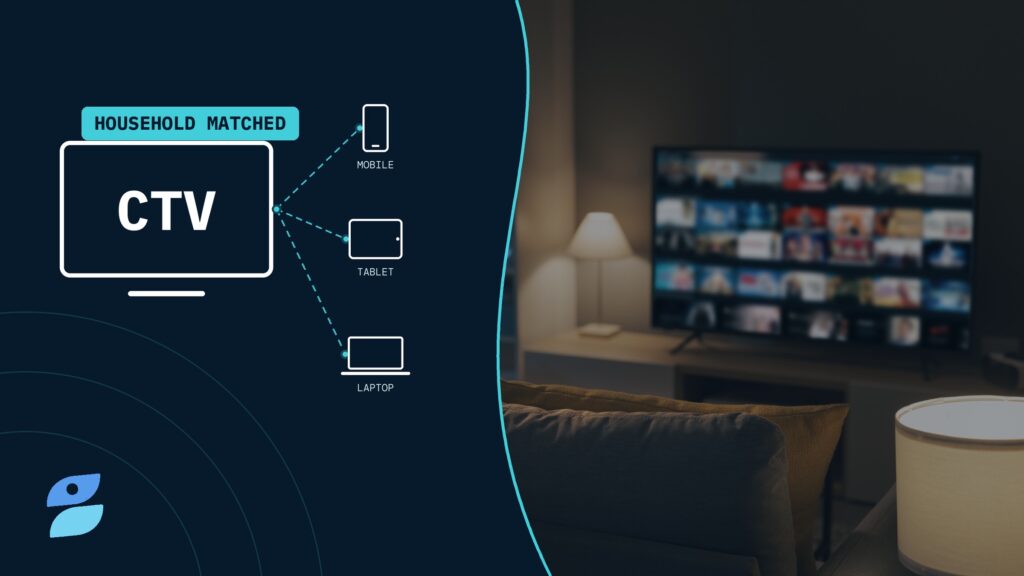
CTV audience targeting, short for connected TV audience targeting, only works as well as the signals that survive the trip from publisher to buyer.
Key Highlights
- CTV audience targeting matches ads to households using first-party data, device signals, and identity graphs instead of daypart guesses
- Most targeting failures happen in the supply path, when bid requests lose IP, device, or content signals
- Layering first-party, contextual, and behavioral data beats relying on any single source
- Curated private marketplace (PMP) deals carry enriched signals into your DSP, so your segments actually match
- Retargeting and measurement only work when the original impression data is clean
Here’s how the mechanics work, where they break, and how to fix them.
What Is CTV Audience Targeting?
CTV audience targeting means serving streaming TV ads to specific households based on data, not on a show or time slot.
Linear TV buys an estimated audience. Connected TV buys an addressable one, impression by impression, through programmatic auctions and deals.
That’s why addressable TV advertising and CTV often come up together. The difference is that addressable linear still runs on cable and satellite set-top boxes, while CTV runs through streaming apps. For the basics, see our guide to what CTV is.
How CTV Targeting Works in a Programmatic Buy
Every CTV impression starts as a bid request describing the device, the content, and the household behind the screen.
Signals in the bid request:
- IP address and device type, used to resolve households
- App bundle and content metadata, used for contextual targeting
- Geo data down to ZIP code or designated market area (DMA)
Your demand-side platform (DSP) matches those signals against your audience segments and decides whether to bid. The fields sellers can pass are defined by the IAB Tech Lab OpenRTB specification.
The catch: not every seller passes every field.
Types of CTV Audience Targeting Data
Strong CTV targeting layers several data types instead of leaning on one.
Data layers to combine:
- First-party data: CRM lists and site visitors matched to households through an identity partner
- Third-party segments: demographic, behavioral, and purchase-based audiences
- Contextual signals: genre, content rating, and live versus on-demand
- Geographic targeting: ZIP, DMA, or custom radius
Each layer narrows the audience. Stack too many, and reach shrinks until the campaign underdelivers. That’s why setting clear CTV campaign goals should come before you build segments.
Where CTV Audience Targeting Breaks Down
Most targeting problems aren’t data problems: they’re supply path problems.
When a bid request passes through multiple resellers, signals get dropped, truncated, or masked. Your DSP then sees a thinner request and either skips it or bids blind.
Common failure points:
- Missing or masked IP addresses, which break household matching
- Generic app bundle IDs that hide the real content
- Reseller hops that strip content metadata
- Spoofed inventory posing as premium apps
That’s why supply path optimization for CTV and targeting belong in the same conversation.
How Curated Deals Improve CTV Targeting
Curation fixes targeting at the source by controlling which impressions reach your DSP and what data travels with them.
On the sell side, a curator can enrich bid requests with audience and contextual data before the auction. That supply is then packaged into PMP deals your traders activate with a deal ID.
That’s how we built our Ichiro curation platform. Ichiro is SSP-agnostic, so we curate across supply-side platforms (SSPs) and apply bid enrichment. As a result, the audience you target is the audience the impression actually carries.
What changes for the buyer:
- Higher match rates between your segments and available impressions
- Fewer wasted bids on thin or spoofed requests
- Ready-to-activate audience packages for live sports and political advertising campaigns
CTV Retargeting and Measurement
CTV audience targeting doesn’t end at the impression.
CTV retargeting lets you re-engage households that saw your ad, on the TV or on other devices in the same home. Measurement ties that exposure to outcomes like site visits or conversions through household matching.
Both depend on clean impression data. If the original bid request was degraded, the retargeting pool and attribution report inherit the same gaps. Even local advertisers now expect this accountability, as eMarketer’s coverage of CTV targeting for local advertisers shows.
The Bottom Line
CTV audience targeting wins when the data, the supply path, and the deal structure all line up.
Layer first-party, contextual, and behavioral data, but don’t stop there. Check which signals your supply actually passes, and favor curated PMP deals that enrich them.
Want to see what enriched CTV supply looks like in your DSP? Book a meeting with our team.
Frequently Asked Questions
What is the difference between CTV targeting and addressable TV?
CTV targeting serves ads to streaming households through apps on smart TVs and streaming devices, usually bought programmatically. Addressable TV is broader and also includes cable or satellite TV delivered through set-top boxes that swap ads by household. Both use household-level data. However, CTV inventory mostly trades through DSPs and SSPs, while addressable linear often runs through operator platforms.
Can you target individuals on CTV, or only households?
Most CTV targeting resolves to the household, because a smart TV is a shared device without cookies. Identity graphs link the TV’s IP address to other devices in the home, which supports cross-device retargeting and attribution. Individual-level targeting is limited, so plan audiences around household attributes and use content signals to tilt delivery toward the viewer you want.
Why does my CTV campaign underdeliver against narrow audiences?
Narrow audiences shrink the pool of matching impressions, and degraded bid requests shrink it further. If sellers drop IP or content data, your DSP can’t match many impressions to your segments. Widen one targeting layer at a time. Then source supply through curated PMP deals that enrich bid requests, so more available inventory qualifies for your audience.

Jake Gardner
The founder and CEO of Splash Bay Media, Jake has over 15 years of experience in digital marketing and ad tech. He’s built, scaled, and exited high-performance teams, products, and data-driven solutions that help advertisers and media partners succeed in an increasingly complex digital landscape. At Splash Bay, he leads the company’s strategic vision and growth, focusing on innovative traffic-shaping solutions, advanced analytics, and transparent supply-path optimization to drive efficiency, performance, and scale. He works closely across marketing, sales, client services, product, and finance to ensure we deliver measurable results and long-term value for our clients.