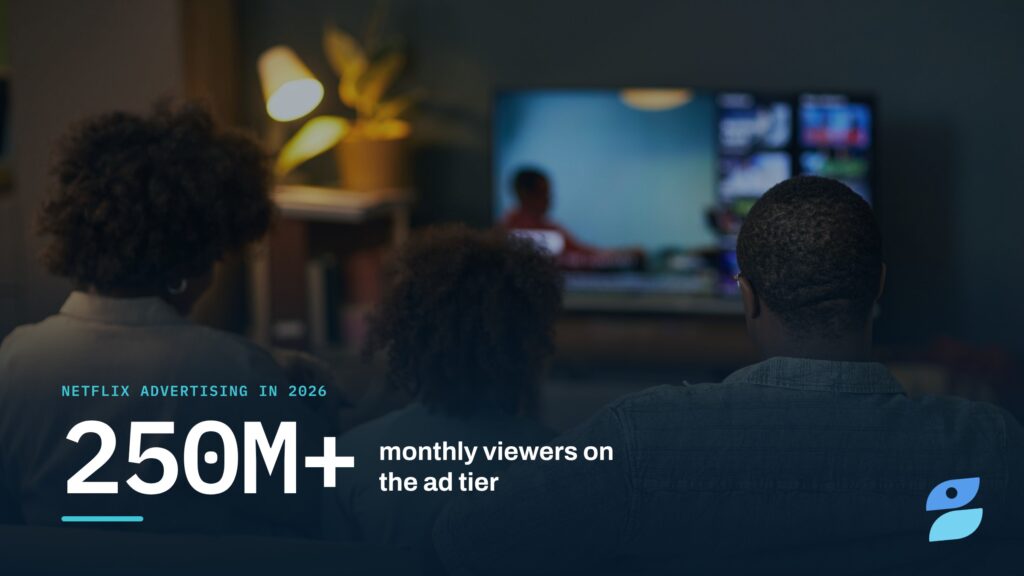
Netflix advertising has gone from a closed, direct-sold experiment to premium CTV inventory you can buy from most major DSPs.
Key Highlights
- Netflix says its ad tier now reaches more than 250 million monthly active viewers worldwide.
- Buyers can reach Netflix inventory through The Trade Desk, Google DV360, Amazon DSP, Yahoo DSP, Microsoft, and Magnite.
- The Trade Desk dropped spend minimums for always-on Netflix marketplace deals in July 2026, opening the door to smaller budgets.
- Formats now go beyond standard video to pause ads, interactive ads, vertical video, and live events.
- Netflix publishes no rate card, so pricing depends on how you buy, what you target, and when you run.
Here’s how Netflix advertising works today and how to buy it well.
How Netflix Advertising Has Changed
Netflix launched its ad-supported plan in late 2022 with a limited set of buyers and high minimums.
That has changed fast. At its May 2026 upfront, Netflix said the ad tier reaches more than 250 million monthly active viewers globally, up from about 190 million the previous November. It also said more than 80% of ad-tier members watch every week.
One caveat: that 250 million figure is Netflix’s own, and as Forbes noted after the upfront, Netflix hasn’t detailed how it counts a monthly active viewer. Plan around your own reach and frequency data, not the headline number.
Netflix also now runs its own ad tech, the Netflix Ads Suite, which powers its targeting, measurement, and programmatic connections.
Netflix Ad Formats
Netflix ads are non-skippable and play on a mostly lean-back, full-screen TV experience.
Standard video: short spots that run before or during content, typically 15 or 30 seconds.
Pause ads: a display placement that appears when a viewer pauses a show.
Interactive ads: overlays and calls to action layered onto video spots.
Vertical video: short-form placements built for Netflix’s mobile experience.
Live events: ad breaks inside live programming, including sports.
Sponsorships: brand alignment with a specific title, premiere, or event.
Ad loads on Netflix are lighter than on traditional TV, which helps each spot stand out.
Targeting and Measurement on Netflix
Netflix targeting has grown from basic demographics into a fuller toolkit.
- Contextual targeting: match creative to specific shows, films, or genres
- Audience targeting: reach interest and demographic segments, plus your own first-party audiences through supported DSPs
- Clean rooms: match your customer data with Netflix’s through partners like Snowflake, AWS, and InfoSum
- Geography: target by country and region, with finer location targeting in some markets
On measurement, expect reach, frequency, and completion reporting, plus brand lift and outcome studies through Netflix and its partners. Set your KPIs before launch so you know which reports matter. Our guide to setting goals in CTV advertising walks through how.
How to Advertise on Netflix
There are two main ways to buy Netflix inventory.
Direct: work with Netflix’s ad sales team on an insertion order or upfront commitment. This route offers the most sponsorship and custom options but usually comes with higher minimums.
Programmatic: buy through a DSP you already use. Netflix programmatic inventory is available through The Trade Desk, Google DV360, Amazon DSP, Yahoo DSP, and Microsoft, with Magnite on the supply side.
Programmatic deals come in a few forms:
- Programmatic guaranteed: reserved volume at a fixed price
- Private marketplace (PMP): invite-only auctions with Netflix inventory
- Marketplace deals: in July 2026, The Trade Desk opened always-on Netflix deals with no minimum spend
For most agencies and mid-size brands, programmatic is now the simplest way to test Netflix advertising.
How Much Does Netflix Advertising Cost?
Netflix advertising costs aren’t published. There is no public rate card, and pricing varies with how you buy.
What drives price:
- Buying route: direct deals and sponsorships typically cost more than programmatic
- Targeting: layering audience or contextual targeting raises CPMs
- Timing: big premieres, live events, and Q4 cost more
- Commitment: upfront deals can lock in better rates
Netflix prices are generally reported to have come down as its ad supply has grown. Even so, it remains a premium buy, so compare it against other streaming options on cost per completed view and reach, not CPM alone.
How Netflix Compares to Other Streaming Platforms
Netflix is now one of several premium ad-supported streamers.
Its strengths are scale, cultural reach, and premium original content. Its limits are less transparency than open CTV inventory and pricing that still runs higher than many FAST and AVOD apps.
That’s why most CTV plans treat Netflix as one part of a broader streaming mix, alongside other premium apps, FAST channels, and platforms like Roku. For context on the wider market, see our guide to AVOD, SVOD, TVOD, and FAST and our look at whether Apple TV has ads.
Making Netflix Part of a Smarter CTV Plan
Now that Netflix sits inside the programmatic pipes, supply quality matters as much as the logo.
Check which seller each Netflix deal comes from and keep paths to the inventory short. Our trader’s guide to supply path optimization explains what to look for.
Then plan Netflix alongside the rest of your streaming buy. PubHub, our CTV planning platform, lets you build packages by audience, show or live event across premium apps and estimate reach before you commit. Ichiro, our CTV curation platform, packages that supply into curated deals you activate in the DSP you already use.
The Bottom Line
Netflix advertising is no longer a closed, high-minimum test.
With more than 250 million claimed monthly viewers, new formats and access through most major DSPs, Netflix is now a real option for CTV buyers. The smartest plans treat it as one premium piece of a broader streaming mix, measured against the same goals and held to the same supply standards.
Ready to build Netflix into your next CTV plan? Talk to our team about curated streaming deals.
Frequently Asked Questions
How does Netflix advertising work?
Netflix shows non-skippable ads to members on its ad-supported plan. Advertisers buy that inventory directly from Netflix’s ad sales team or programmatically through supported DSPs like The Trade Desk, DV360, and Amazon DSP. Formats include standard video spots, pause ads, interactive ads, and live event breaks, with contextual and audience targeting available.
How much does it cost to advertise on Netflix?
Netflix doesn’t publish a rate card, so costs vary by buying route, targeting, timing, and commitment. Direct deals and sponsorships usually cost more than programmatic buys, and premieres or live events command higher prices. Since July 2026, The Trade Desk’s always-on Netflix marketplace deals carry no minimum spend, making smaller tests possible.
Can you buy Netflix ads programmatically?
Yes. Netflix inventory is available through The Trade Desk, Google DV360, Amazon DSP, Yahoo DSP, and Microsoft, with Magnite on the supply side. Buyers can use programmatic guaranteed deals, private marketplaces, or, on The Trade Desk, always-on marketplace deals. This lets agencies add Netflix to existing CTV campaigns without a separate direct contract.
Is Netflix advertising worth it?
For brands that want premium, full-screen reach with strong content alignment, Netflix can be worth it. It works best as part of a broader CTV plan rather than a standalone buy. Compare it with other streaming options on cost per completed view, incremental reach, and outcomes, and keep your supply paths clean so more spend reaches the impression.

Jake Gardner
The founder and CEO of Splash Bay Media, Jake has over 15 years of experience in digital marketing and ad tech. He’s built, scaled, and exited high-performance teams, products, and data-driven solutions that help advertisers and media partners succeed in an increasingly complex digital landscape. At Splash Bay, he leads the company’s strategic vision and growth, focusing on innovative traffic-shaping solutions, advanced analytics, and transparent supply-path optimization to drive efficiency, performance, and scale. He works closely across marketing, sales, client services, product, and finance to ensure we deliver measurable results and long-term value for our clients.