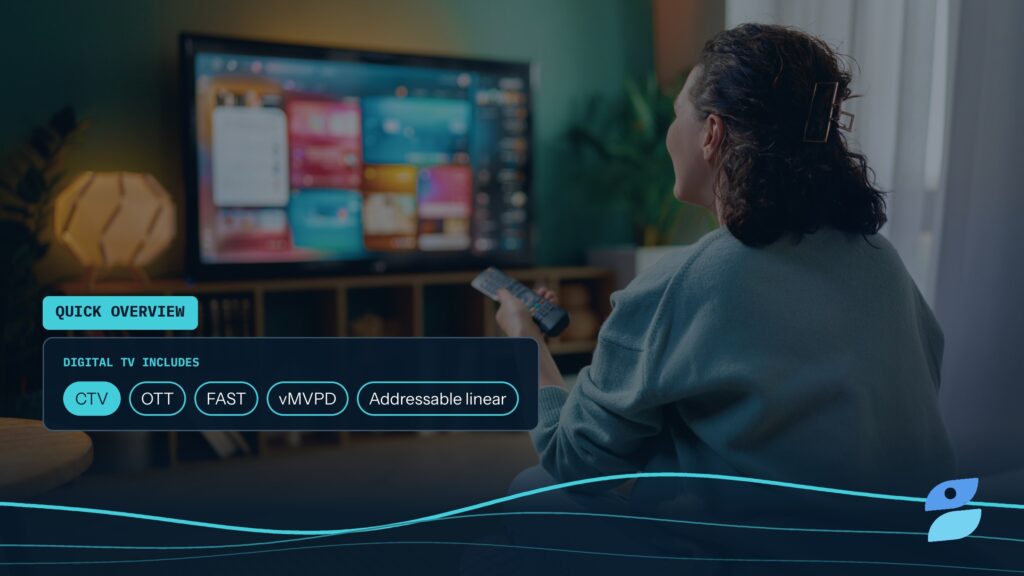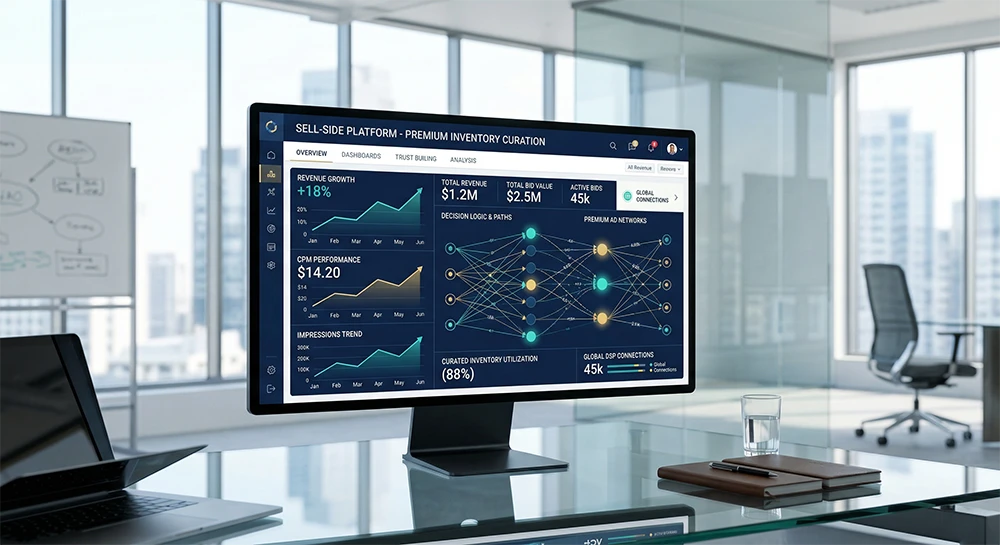
Sell-side decisioning is transforming programmatic advertising by shifting optimization from the demand side to the supply side. Instead of relying only on DSPs, supply-side platforms now curate and filter inventory before auctions, improving signal quality, targeting accuracy, and campaign performance especially in complex environments like CTV and large-scale digital ecosystems.
The Evolution of Digital Advertising
Over the past 15 or so years, the digital advertising landscape has exploded, transforming the industry into a complex programmatic trading ecosystem. But what’s this all about, really?
It means that we can now tap into massive amounts of data and sophisticated targeting tools to build audiences and target them across the web. Don’t get me wrong, one-to-one deals between ad buyers and brands/publishers still happen, but the industry’s grown to the point where new and smaller brands can buy ad space and get in front of viewers/users they never could before.
The Scale of the Online Advertising Industry
The online ad industry is a massive beast, with the ability to reach an audience getting more and more specific by the day. As of October 2025, there’s an estimated 200 million active websites out there, each churning out content and data that can be consumed. Many of these sites are built and supported by advertising.
What Programmatic Advertising Has Solved
What’s really cool is that sifting through all that data’s become second nature, and finding a brand’s audience’s one of the things that the industry’s cracked. Building campaigns, finding audiences, tracking performance – all these things are things that ad tech partners have built into their toolkits.
The Expansion of Advertising Channels
Of course, there’s a whole bunch of different channels available these days, each with its own strategies:
- Social
- Open-web
- Walled gardens
- Audio Connected TV (CTV)
- And many more
The challenge is that we’re dealing with an absolute mountain of data. The infrastructure and complexity of monetizing a website isn’t getting any easier, and finding your audience online, while easy to set up, is starting to get more complicated by the day. The data just isn’t as clean as it used to be, and the pipes are getting a bit rusty.
And with the rise of streaming TV over the last few years, content owners and brands are still trying to get their heads around how to transition into this new way of doing business, especially when it comes to CTV.
As we mentioned earlier, the brand tools, or what we call buy-side tools (DSPs), have evolved and are now commanding billions of dollars in ad spend. Companies like Google, The Trade Desk, and Amazon have all built out robust DSPs that let you target people across all sorts of channels.
But they also rely on technology companies called SSPs to help them source the supply. Finding and partnering with millions of websites, or thousands of TV channels, is no easy task.
And that’s where things get really interesting.
While sourcing and seeing tons of viewers/users and understanding trillions of ad requests is crucial, DSPs are still not able to deliver a strong signal to ad buyers. CTV in particular has a problem with getting the right kind of ad request to ad buyers, and so loads of interference occurs. The data and signal just isn’t that clean.
This has allowed the rise of sell-side decisioning and ad curation – giving ad buyers the ability to get purer signals from the supply side while shaping traffic and eliminating noise.
After more than a decade of seeing ad inventory directly (SSPs), the technology has evolved to the point where supply-side companies can make smarter decisions, not just demand-side ones.
What Is Sell-Side Decisioning?
Sell-side decisioning is the ability to target your ad campaigns on the supply side, giving you more control over the traffic you get.
Instead of buyers seeing a huge firehose of inventory and relying on DSP filtering to sort the wheat from the chaff, sell-side companies curate that inventory for you to provide a more refined and valuable view of available ad impressions.
Traditional SSP vs Modern Sell-Side Intelligence
Traditional SSPs:
- Just aggregated publisher inventory
- Passed all impressions to DSPs
- Focused on getting as much volume as possible
Modern sell-side decisioning:
- Cuts through the noise, filtering out the low-quality impressions
- Shapes the traffic to match what your buyers need
- Improves the signal quality, and makes things a lot more efficient
Why This Shift Matters
Before, DSPs were overwhelmed by the sheer volume of inventory and had to throttle requests based on cost, rather than performance.
Sell-side decisioning changes this by:
- Only delivering relevant inventory to the DSP
- Cutting down on waste
- Improving auction efficiency
- Improving targeting precision from the word go
How Programmatic Advertising Is Evolving
Traditionally, the buy-side and sell-side had pretty clearly defined roles.
Buy-Side (DSPs):
- Audience targeting
- Budget control
- Optimisation
Sell-Side (SSPs):
- Inventory aggregation
- Monetisation
- Bidstream delivery
The problem was that DSPs were having to sift through massive amounts of low-quality or irrelevant inventory.
The Shift Today
Sell-side decisioning moves intelligence upstream:
- Better data gets into the bidstream
- Buyers get higher-quality ad opportunities
- Targeting becomes more precise from day one
Why Sell-Side Decisioning Is Rising Now
Several technological advancements are driving this shift:
- Cloud infrastructure lets us process data in real-time at scale
- Parallel processing makes things a lot faster and more efficient
- Edge computing reduces latency and makes things snappier
- Improved data signals (contextual, first-party, behavioural) are giving us more accurate results
In CTV especially, better signal processing is unlocking:
- Show-level data
- Channel-level targeting
- Enhanced audience segmentation## How Sell-Side Decisioning Works – Behind the Scenes
Sell-side decisioning happens way before the auction even starts – in the pre-bid phase.
The Key Process:
- We evaluate inventory in a tiny fraction of a second – it’s lightning quick
- We apply algorithms and data signals to identify the best opportunities
- Then we filter and shape bid requests so they’re only the highest-quality ones we can send to DSPs
This approach:
- Slashes duplication
- Gives us better win rates
- Boosts publisher yield
- Takes campaign performance to the next level
Key Use Cases for Sell-Side Decisioning
1. Sell-Side Curation – Making the Best of Your Inventory
- Packaging inventory using proprietary data that only we have access to
- Enhancing targeting and performance
- Delivering inventory that really speaks to the right audience
2. Agentic Decisioning – The AI-Powered Way to Optimise
- AI-driven real-time decision making
- Optimisation that really cuts through the noise
- Improved brand safety and performance
3. CTV Optimisation – The Many Faces of CTV
- Show-level targeting that really hits the spot
- Channel-specific campaigns that work
- Audience-layered buying strategies that drive results
According to our SpinSignal framework, campaigns can seamlessly integrate with existing DSP workflows, and supply-side intelligence can boost performance automatically.
Emerging Applications Across the Ecosystem
- Commerce media networks that bring new ideas to the table
- Creative tech platforms that let you get really creative
- Measurement providers that give you real insights
- Streaming TV ecosystems that deliver what viewers want
CTV is a growth area that’s getting more and more complex all the time – we’ve got inventory types, data signals and measurement standards to navigate.
Sell-Side Decisioning vs Sell-Side Curation
- Curation is a subset – it’s all about packaging inventory.
- Decisioning is the broader picture – it’s all about intelligence and optimisation.
Decisioning includes a lot more than just curation – it’s about:
- Optimisation logic that cuts through the noise
- Data processing that really gets to the heart of things
- Auction shaping to get the best out of every ad
- Signal enhancement that makes everything work better
Why Scale Matters in Sell-Side Decisioning
Scale is critical – especially in CTV
- We need access to a wide range of inventory types
- We need to overcome DSP throttling limitations that hold us back
- We need better discovery of valuable impressions that really drive results
A strong supply-side strategy is the key to:
- Broader reach and more visibility
- Better pricing efficiency and higher yields
- Improved campaign outcomes and better ROI
The Future of Sell-Side Decisioning
The future is all about:
- AI-driven agentic systems that can really make decisions
- Greater transparency that lets everyone see what’s going on
- Replicating the advantages of walled gardens in the open web
- A more efficient programmatic ecosystem that works for everyone
Companies like Splashbay Media are already leading the way in this space with curated CTV supply and advanced supply-side intelligence.
Why Partnership Is a Must
Successful sell-side decisioning needs:
- Open APIs that let us talk to each other
- Transparent infrastructure that lets us see what’s going on
- Strong relationships with publishers that give us the best inventory
- Data partnerships that give us the insights we need
And this reduces:
- Hidden fees that eat away at profits
- Reporting opacity that makes it hard to make decisions
- Inefficiencies that waste time and money
How Sell-Side Decisioning Creates a Better Programmatic Ecosystem
- Fairer access to data and intelligence that everyone can benefit from
- Stronger performance outcomes that drive real results
- Better monetization for publishers that really boosts revenue
- Easier integration for new technologies that make everyone’s life easier
Conclusion
Sell-side decisioning marks a fundamental shift in programmatic advertising.
Instead of relying on DSPs to filter out the good from the bad, we’re now applying intelligence at the source – to improve signal quality, efficiency and performance across the board.
As CTV and programmatic keep evolving, sell-side decisioning will play a critical role in shaping the future of digital advertising, enabling smarter buying, better targeting, and more transparent transactions.
FAQs
What is sell-side decisioning in programmatic advertising?
Sell-side decisioning is the process of applying data and optimisation logic on the supply side before ad inventory reaches DSPs, making targeting and efficiency a whole lot better.
How is sell-side decisioning different from traditional SSP functionality?
Traditional SSPs are all about aggregating inventory, whereas sell-side decisioning is about adding intelligence to filter and curate inventory before it hits the auction.
Why is sell-side decisioning important?
It improves signal quality, cuts waste and boosts targeting, and creates more efficient programmatic transactions that benefit everyone.
What are examples of sell-side decisioning use cases?
Examples include ad curation, CTV targeting, AI-driven optimisation, and audience-based inventory packaging.
What’s the difference between sell-side curation and sell-side decisioning?
Curation is a subset that’s all about packaging inventory, while decisioning is the broader picture that includes optimisation, data processing, auction shaping and signal enhancement.

Jake Gardner
The founder and CEO of Splash Bay Media, Jake has over 15 years of experience in digital marketing and ad tech. He’s built, scaled, and exited high-performance teams, products, and data-driven solutions that help advertisers and media partners succeed in an increasingly complex digital landscape. At Splash Bay, he leads the company’s strategic vision and growth, focusing on innovative traffic-shaping solutions, advanced analytics, and transparent supply-path optimization to drive efficiency, performance, and scale. He works closely across marketing, sales, client services, product, and finance to ensure we deliver measurable results and long-term value for our clients.