Introduction to Television Advertising
Why TV
Welcome to Splash Bay Media’s guide to CTV. Approximately 96% of all American households own at least one working television. TV is one of the biggest mediums for attention and consumer purchases.
This is where long-form content can be consumed and attention is still available. Major products and events over the last 60 years have been introduced and built through television, and it remains a medium that attracts significant attention from the majority of the population.
However, over the last 20 years, with the rise of phones and social media, the way consumers interact with TV has changed. It is crucial to understand how to use TV as a modern marketing channel.
This guide goes into the nuts and bolts of TV advertising, specifically streaming TV advertising, and how it can be an effective channel for marketing efforts.
Why CTV and Streaming TV
With the rise of cord cutting, more and more brands are moving toward streaming TV. While traditional television is declining, television content remains crucial and continues to hold significant consumer attention.
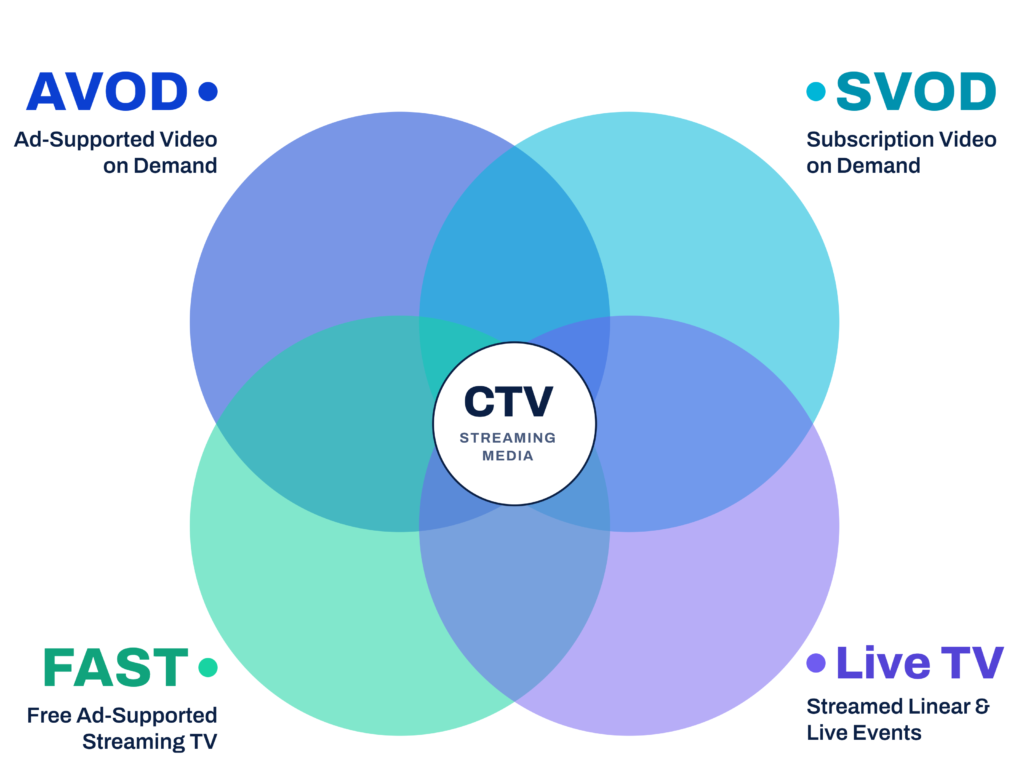
In streaming TV, there are several major types of content:
- AVOD – Ad-Supported Video on Demand
- SVOD – Subscription Video on Demand
- FAST – Free Ad-Supported Streaming Television
- Live TV – Traditional live programming moving to streaming
Changing Viewer Behavior
While viewer habits have shifted, it is critical to understand how consumers interact with brands.
With the rise of social media, smartphones, new creative opportunities, smart TVs and technology in general, consumers are interacting with brands across multiple touchpoints in ways that were not possible even 10 years ago.
Using dynamic and interesting creative to enhance and build discussion around a brand or event is paramount to a modern marketing strategy.
The BIG events are still big. In many cases, they are getting bigger and more unified. At the same time, there are increasingly niche audiences available for targeting.
Brands have been targeting niche audiences for years on mobile, and now streaming TV gives them the ability to reach many of these audiences at scale.
Part I: Understanding the Streaming TV Industry
State of the TV Industry and Content
There is significant discussion around the state of TV, content, and advertising. For this guide, we are going to focus specifically on media buying and advertising.
Linear TV vs. Streaming TV
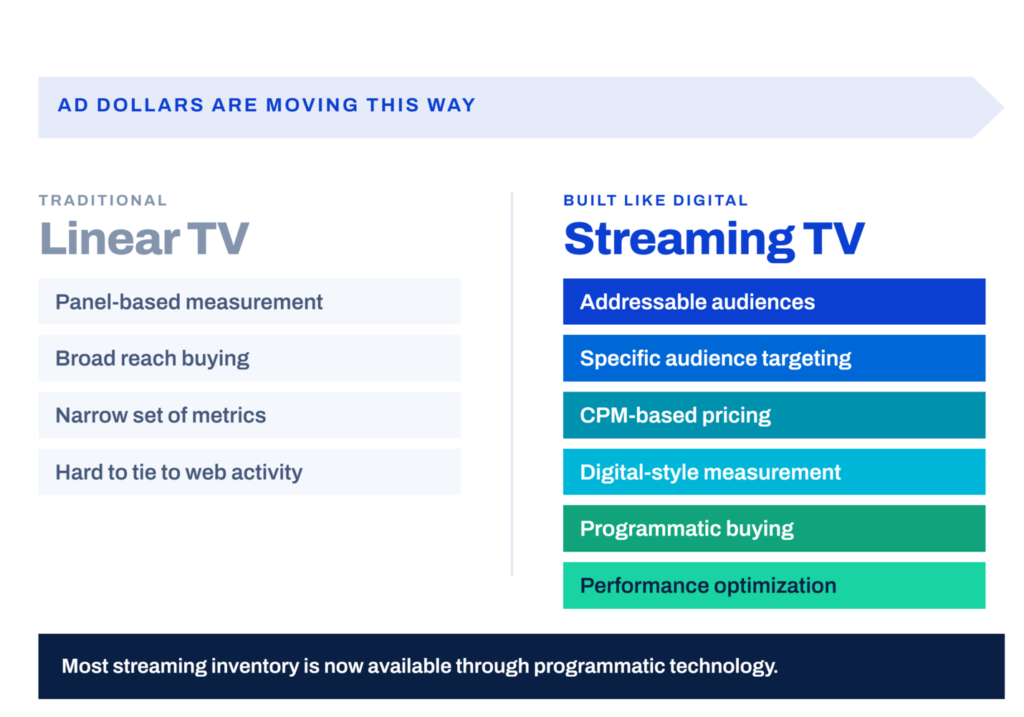
There is an important difference between advertising on linear television and streaming television.
Linear TV represents traditional television buying, historically based heavily on Nielsen panel-based measurement.
Connecting television exposure to website activity and measuring effectiveness for digital-first brands can be difficult. While traditional television remains effective, measurement has historically relied on a relatively narrow group of metrics.
Streaming TV was built more like digital media and commonly includes:
- Addressable audiences
- Specific audience targeting
- CPM-based pricing
- Digital-style measurement
- Programmatic buying
- Performance optimization
This guide will primarily focus on streaming TV.
Most streaming inventory is now available through programmatic technology, which we will discuss in depth.
The Streaming Wars
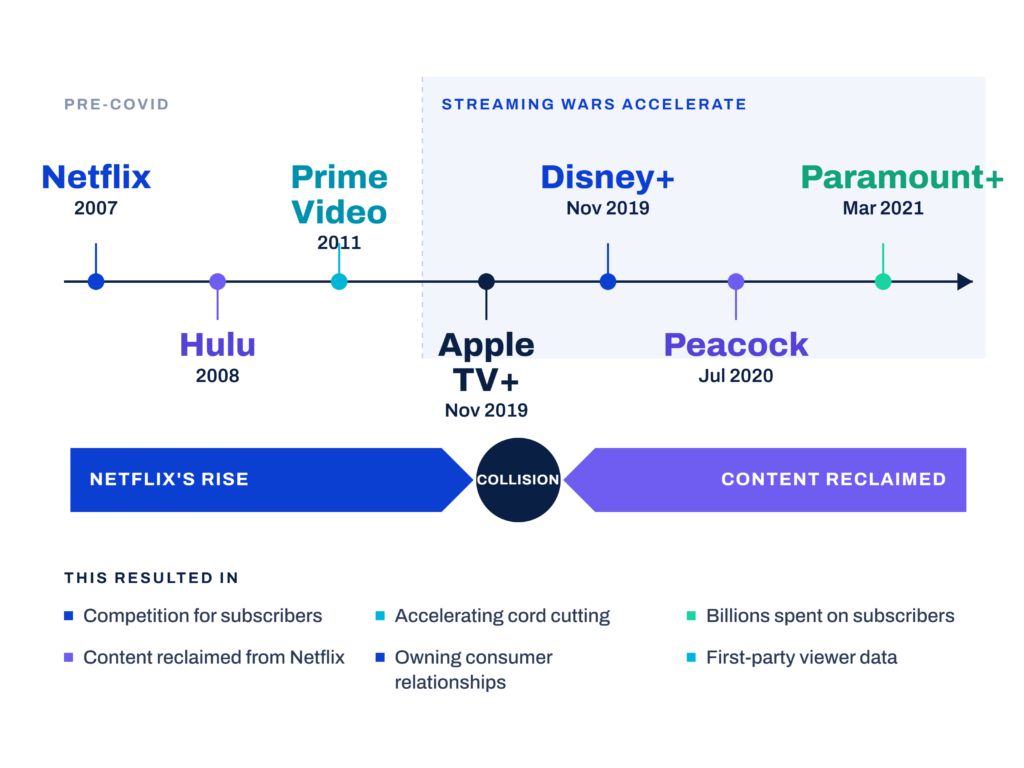
The streaming wars began accelerating shortly before COVID, as large legacy media companies with extensive content libraries attempted to defend themselves against the growing influence of Netflix.
Companies such as Disney and NBCUniversal launched their own streaming platforms, and seemingly every major media company began releasing streaming applications.
This resulted in:
- Huge competition for subscribers
- Accelerating cord cutting
- Billions of dollars spent acquiring subscribers
- Media companies reclaiming content from Netflix
- Greater emphasis on owning consumer relationships
- Greater emphasis on first-party viewer data
Major streaming platforms that emerged include:
- Netflix
- Disney+
- Peacock
- Apple TV+
- Amazon Prime Video
- Paramount+
- Hulu
Walled Gardens
What Is a Walled Garden?
Walled gardens are inventory sources that make it difficult for advertisers to share data and understand the complete picture when buying media.
While buying platforms may provide access to many of these streaming services, walled gardens typically involve:
- Higher prices
- Higher entry minimums
- Limited data sharing
- Restricted measurement
- Restricted inventory access
Publishers such as Netflix, Amazon Video and Apple TV primarily operate as closed ecosystems.
While these platforms are increasingly opening themselves to streaming TV media buyers, direct access can still be difficult without significant spending commitments.
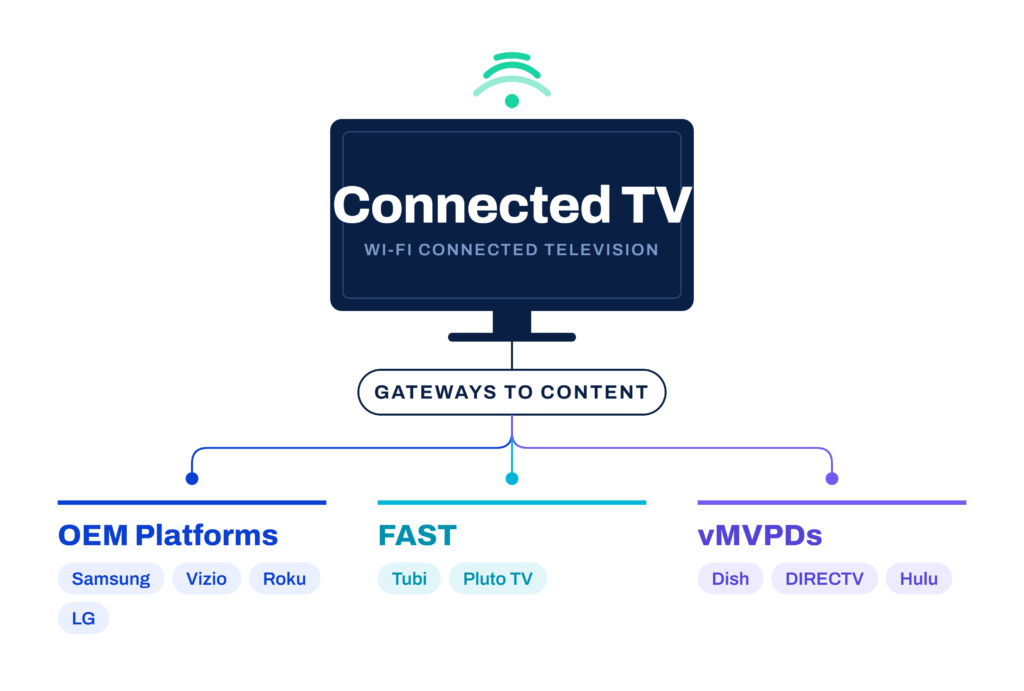
The Rise of OEMs, FAST and vMVPDs
FAST Platforms
Free streaming platforms have become a major part of television consumption.
Companies such as:
- Tubi
- Pluto TV
are primarily powered by advertising rather than subscriptions.
vMVPDs
Other platforms operate more similarly to traditional cable television.
Consumers pay a subscription fee while receiving access to live television supported partly by advertising.
Examples include:
- Dish
- DIRECTV
- Hulu
OEM Streaming Platforms
Television manufacturers also began creating their own built-in streaming services.
These are often referred to as FAST channels or OEM streaming environments.
Major manufacturers include:
- Samsung
- Vizio
- Roku
- LG
A consumer can purchase a connected television, plug it into the wall, connect it to Wi-Fi and immediately receive hundreds of television channels without purchasing a traditional cable subscription.
These channels are funded primarily through advertising.
Part II: The Programmatic CTV Ecosystem
The Rise of CTV Programmatic
Now that we have covered the overall streaming television industry, the next step is understanding how advertisers and brands access this inventory.
The programmatic CTV ecosystem may look familiar to anyone who has purchased digital media before.
Many of the terms are the same:
- DSP
- SSP
- Data
- Measurement
- Programmatic
However, the players, inventory, and technical challenges can be significantly different.
Programmatic buying in CTV is essential, but it requires additional knowledge and understanding.
Advertisers should not assume that CTV will behave exactly like display advertising simply because both are purchased through a DSP.
The Pipes of Programmatic
Programmatic advertising developed more than 15 years ago with the goal of automating media buying and making advertising more unified and efficient.
The ultimate vision was to create centralized platforms where brands could:
- Find audiences
- Purchase media
- Measure exposure
- Track users
- Evaluate campaign performance
In practice, programmatic advertising is complex.
Multiple companies participate in every advertising transaction, and many processes happen within fractions of a second.
Understanding how these technologies interact is essential.
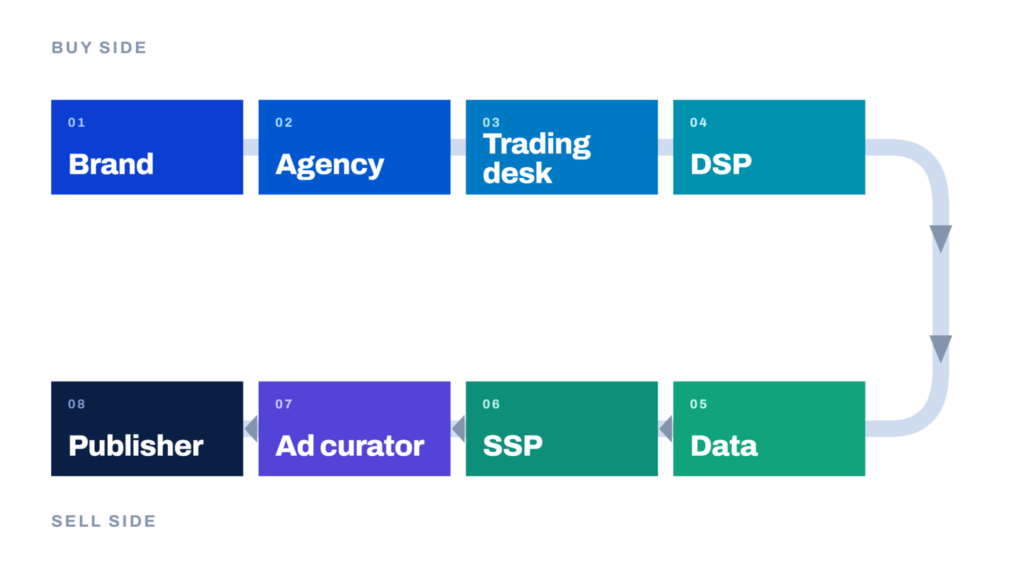
DSPs: Demand-Side Platforms
What Is a DSP?
A DSP is a platform that allows a brand or agency to buy, measure, and manage digital advertising through a centralized system.
DSPs generally allow buyers to manage:
- Budgets
- Creative
- Audiences
- Geographic targeting
- Campaign targeting
- Optimization
- Performance
- Reporting
Example DSP Campaign
Imagine an advertiser wants to spend $100,000 over one month targeting:
- Women
- Households with 2+ children
- Household income above $75,000
- New York
- Florida
- Illinois
- California
- Nevada
- Entertainment programming
These parameters can all be configured within a DSP.
The DSP may also optimize toward a specific business outcome, such as purchasing a product.
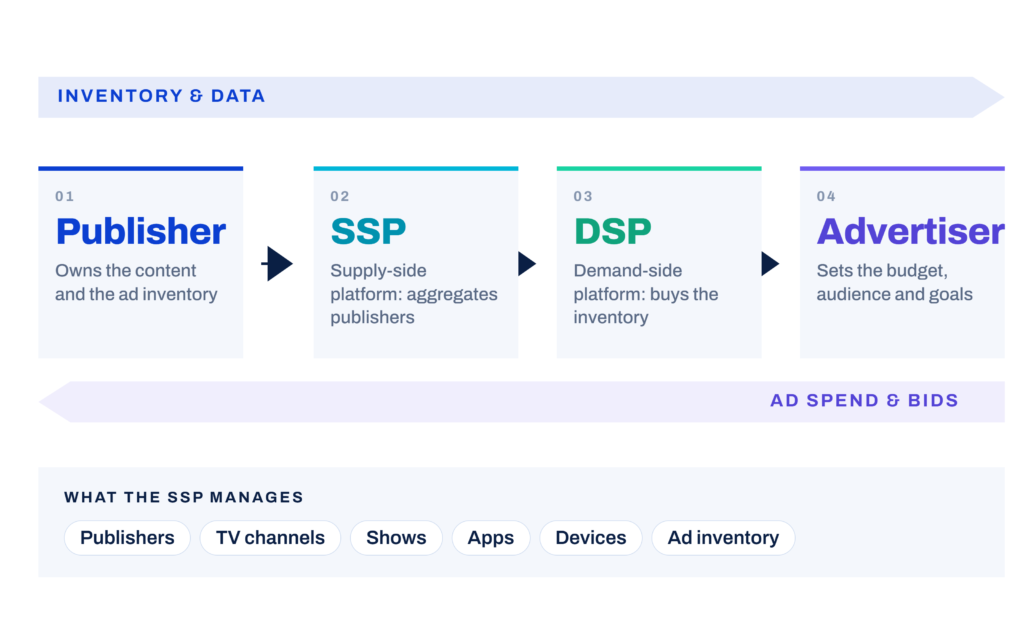
SSPs: Supply-Side Platforms
What Is an SSP?
An SSP provides access to publishers and their advertising inventory.
DSPs generally do not connect individually to every publisher.
Instead:
Publisher → SSP → DSP → Advertiser
SSPs manage relationships with thousands of publishers and inventory sources.
Their goal is to efficiently monetize publisher inventory while providing DSPs with advertising opportunities.
Managing:
- Publishers
- TV channels
- Shows
- Apps
- Devices
- Ad inventory
is extremely complex, which is one of the primary reasons SSPs exist.
Ad Curation Platforms
The rise of ad curation platforms, sometimes called traffic shaping companies, creates an intelligent layer between DSPs and SSPs.
While DSPs theoretically want access to all available advertising inventory, processing every possible advertising opportunity can be technically difficult and cost-prohibitive.

An ad curation platform, such as Splash Bay Media and the Ichiro platform, can help buyers identify and access more of the inventory they actually want. By leveraging advanced algorithms, Ichiro optimizes bid requests in real-time, ensuring that budgets are directed toward high-performing inventory sources.
Curation can help:
- Shape SSP traffic
- Surface higher-quality inventory
- Improve inventory discovery
- Build specific Deal IDs
- Improve efficiency
- Reduce unnecessary bidstream traffic
Data
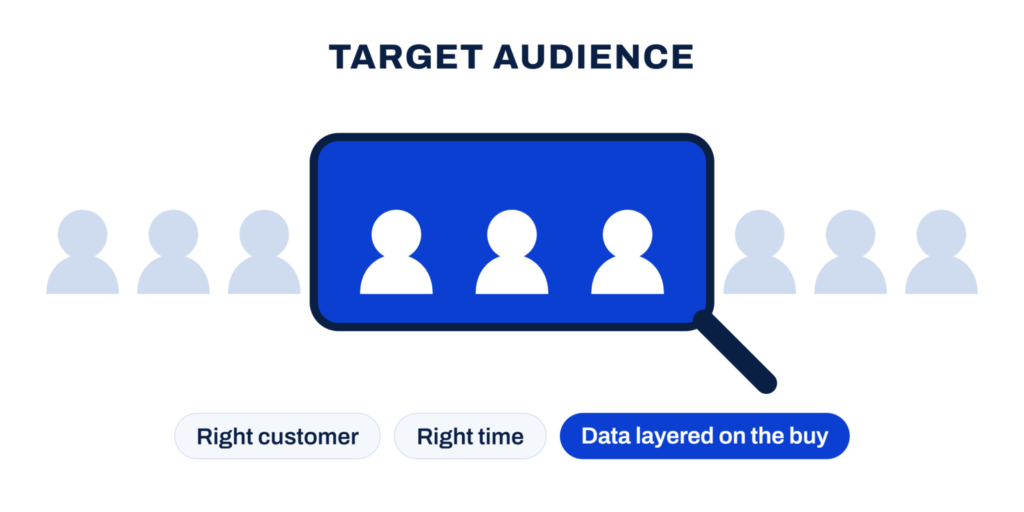
Data is crucial to audience targeting.
Layering audience information onto media buying allows advertisers to become more precise.
The goal is to identify the right potential customers at the right time.
There are many types of data and many different approaches to audience targeting, which we will discuss throughout this guide.
Measurement
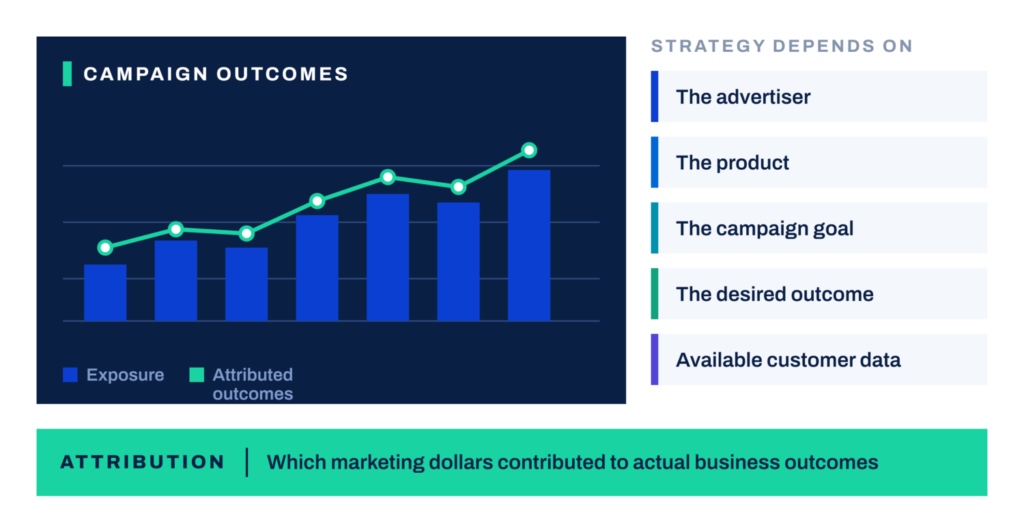
Measurement is one of the holy grails of programmatic advertising.
Determining whether a campaign actually delivered business results can be complex.
Measurement strategies depend heavily on:
- The advertiser
- The product
- The campaign goal
- The desired outcome
- Available customer data
Attribution is essential.
Advertisers ultimately want to understand which marketing dollars contributed to actual business outcomes.
Part III: Operating in CTV
Trading Platforms and Agencies
Traditional advertising agencies can execute streaming television buys, but there are also companies that specialize specifically in CTV.
These businesses may be described as:
- CTV agencies
- Trading platforms
- TV buying platforms
- Managed-service buying platforms
- Performance CTV platforms
These companies can be valuable because they:
- Understand the CTV landscape
- Help advertisers build creative
- Provide campaign strategy
- Negotiate preferred supply rates
- Develop measurement strategies
- Execute media buys
Major CTV-Focused Platforms
Vibe
A low-barrier-to-entry platform where advertisers can access television inventory relatively easily, similar to buying advertising through Facebook.
MNTN
An accessible performance television platform providing buyers with access to significant CTV inventory.
Tatari
An agency and technology platform built for both linear and programmatic television.
tvScientific
A performance-focused CTV trading platform focused heavily on measurable outcomes.
Keynes Digital
An advanced CTV platform used for sophisticated analytics and tracking.
JamLoop
A self-service CTV platform focused on building quality campaigns, including campaigns for local businesses.
Marketing Architects
A long-standing television and audio buying platform operating across both CTV and linear television.
Madhive
Primarily works with local broadcasters and advertisers to execute local CTV campaigns.
Premion
Focused heavily on helping local advertisers execute streaming television campaigns.
Other Major Buying Platforms
Other major companies offering CTV capabilities include:
- StackAdapt
- Amazon DSP
- The Trade Desk
- Google DV360
- Basis
- Simpli.fi
Many of these are broader omnichannel DSPs rather than CTV-only platforms.
The Performance Challenge
Many CTV trading platforms position themselves around performance.
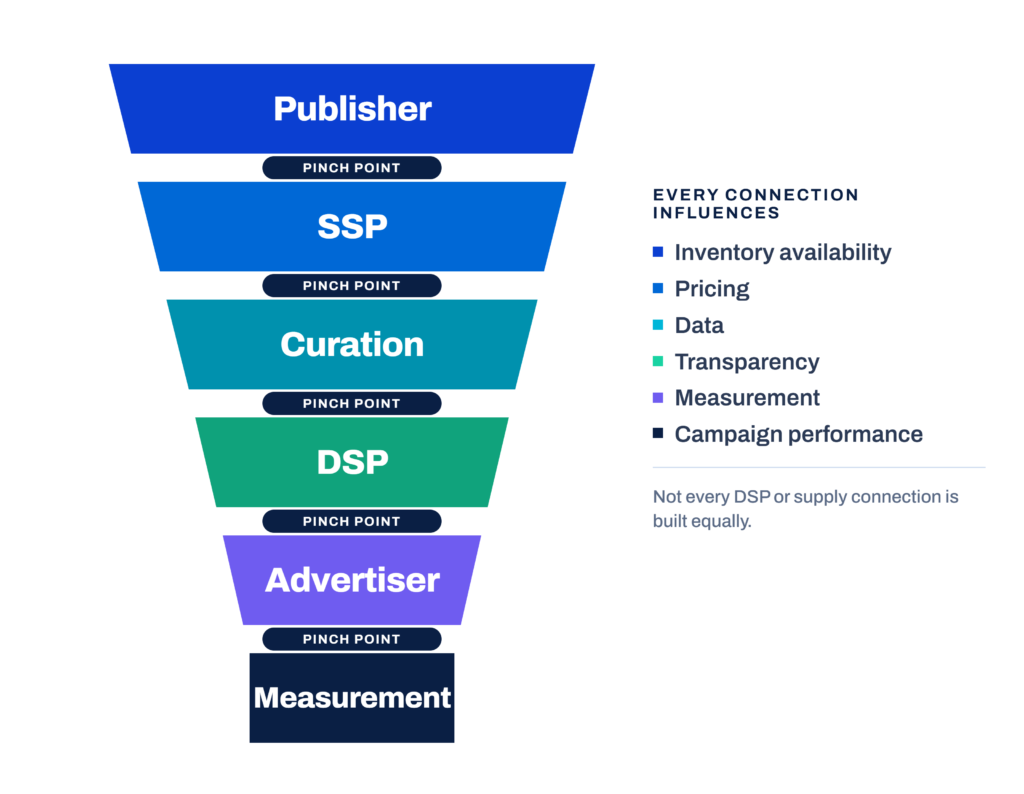
However, not every DSP or supply connection is built equally.
Connections between DSPs and SSPs are subject to technical and commercial limitations that can produce different outcomes for different advertisers.
The ecosystem involves:
Publisher → SSP → Curation → DSP → Advertiser → Measurement
Every connection can influence:
- Inventory availability
- Pricing
- Data
- Transparency
- Measurement
- Campaign performance
Part IV: Supply and Inventory
SSP Platforms
Brands and agencies may sometimes work relatively closely with SSPs.
An SSP’s primary goal is to help publishers monetize their inventory effectively.
Each SSP has its own unique relationships with:
- DSPs
- Publishers
- OEMs
- Streaming platforms
- Ad servers
Major SSPs
- Magnite
- FreeWheel
- Index Exchange
- PubMatic
- Nexxen
- OpenX
- Media.net
Additional SSPs
Other SSPs that can provide access to incremental or sometimes lower-cost inventory include:
- Sonobi
- LoopMe
- Equativ
- Xandr
- Sovrn
- Seedtag
- Verve
Using Multiple SSPs
Connecting to multiple SSPs can provide:
- More inventory
- Better pricing discovery
- Additional publishers
- Improved scale
In many cases, advertisers should consider accessing at least three or four SSPs when building CTV campaigns.
Traffic Shaping and Curation
One of the benefits of working with an ad curator such as Splash Bay Media is the ability to analyze the specific dynamics of a campaign and its outcomes.
An ad curator can help surface the most relevant and efficient inventory from an SSP into a DSP.
Using multiple SSPs and multiple Deal IDs gives buyers additional ways to:
- Find audiences
- Access inventory
- Improve efficiency
- Manage pricing
- Build publisher-specific packages
- Optimize toward outcomes
This can be particularly important in CTV because the market is highly fragmented.
Part V: CTV Measurement and Attribution
Measurement in CTV
Measurement remains difficult in CTV.
Unlike display, search or social advertising, viewers generally cannot click directly on a television advertisement.
Traditional digital campaigns may quickly report:
- CTR
- Conversion rate
- Website visits
- ROAS
Television requires a different measurement methodology.
CTV measurement often involves:
- Identity resolution
- Household matching
- Cross-device attribution
- Incrementality
- Reach and frequency
- Exposure measurement
- Conversion analysis
Measurement Platforms
Performance Measurement Platforms
Platforms commonly used by performance-focused advertisers include:
Northbeam, HYROS, Haus and Lightsight
These platforms are increasingly used by DTC and ecommerce brands to understand CTV alongside channels including:
- Meta
- TikTok
- Search
- Other digital channels
These technologies may support approaches including:
- Multi-touch attribution
- Marketing Mix Modeling
- View-based attribution
- Customer journey measurement
AppsFlyer, Adjust and Kochava
These companies historically focused heavily on mobile application measurement.
They increasingly support CTV by connecting television advertising exposure with:
- App installs
- Subscriptions
- In-app purchases
- Downstream activity
iSpot, Innovid, VideoAmp, Comscore and Nielsen
These are major television measurement platforms.
They help advertisers analyze:
- Exposure
- Reach
- Frequency
- Cross-platform audiences
- Audience duplication
- Outcomes
Homegrown Measurement
More sophisticated brands increasingly build internal attribution systems.
These systems may connect:
- Impression data
- CRM records
- Conversion information
- Sales data
- Revenue
- First-party customer information
These systems can be extremely powerful when advertisers have the resources required to build them.
Marketing Mix Modeling
Marketing Mix Modeling, or MMM, evaluates advertising spending across multiple channels over time.
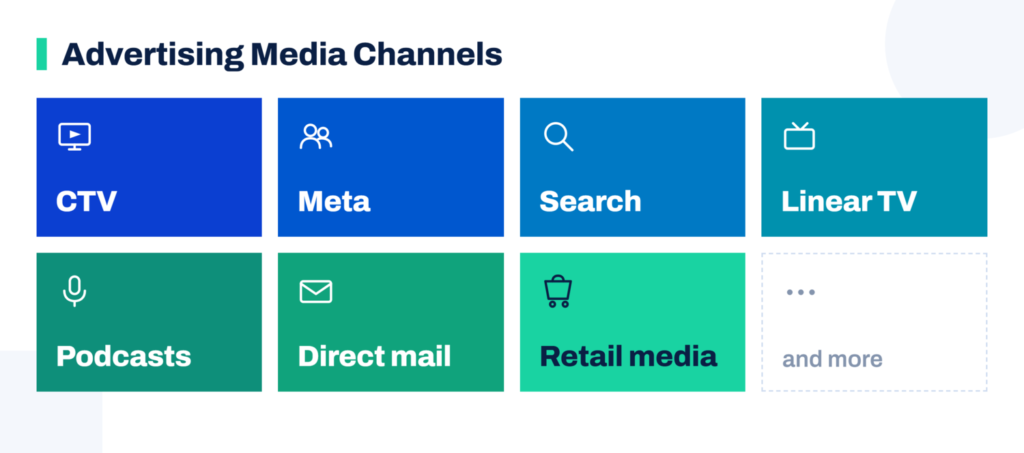
MMM attempts to determine how much incremental business impact each channel generated.
An important question is:
Did CTV actually create incremental sales, or are we simply taking credit for customers who would have converted anyway?
Reach and Frequency
Reach and frequency remain problematic in CTV because inventory is fragmented across:
- Publishers
- OEMs
- FAST services
- Streaming platforms
- SSPs
- DSPs
The same household may receive advertising through multiple inventory sources.
Buyers increasingly need to understand:
- Unique household reach
- Average household frequency
- Maximum household frequency
- Frequency distribution
Cross-platform measurement providers including Innovid, iSpot, VideoAmp, Nielsen and Comscore can help address these problems.
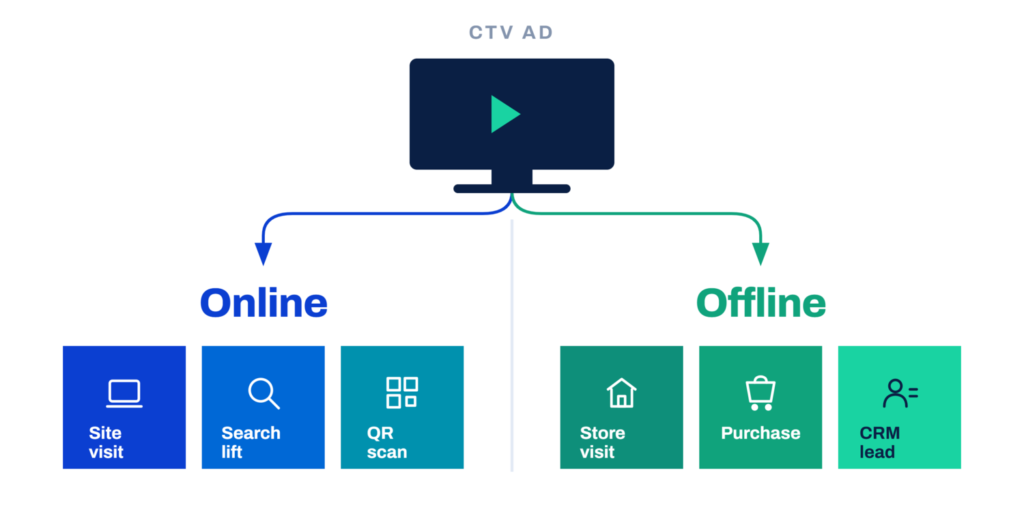
Offline and Online Attribution
CTV frequently creates demand that converts somewhere else.
A viewer might:
- See an advertisement on Hulu.
- Pick up their phone.
- Search for the company on Google.
- Purchase through the advertiser’s website.
Without cross-device or incrementality measurement, Google or another lower-funnel channel may receive all of the credit.
Performance measurement should therefore consider:
- Website visits
- Purchases
- Store visits
- Offline purchases
- CRM leads
- QR-code interactions
- Search lift
- Branded search activity
- Subscription sign-ups
- Revenue
- Customer lifetime value

Call Attribution
For several industries, phone calls may represent the primary conversion event.
Examples include:
- Insurance
- Healthcare
- Financial services
- Home services
- Lead generation
CTV measurement may track:
- Unique phone numbers
- Dynamic phone numbers
- Call duration
- Qualified calls
- Unqualified calls
- Completed sales
- Appointments
- Revenue
- Exposure-to-call attribution
For performance advertisers, the important metric may not simply be cost per call.
More important metrics can include:
- Cost per qualified call
- Cost per acquisition
- ROAS
App Install Measurement
CTV can be particularly effective for application marketers because exposure occurs on one device while conversion usually occurs on another.
Measurement companies such as AppsFlyer and Adjust use cross-device methodologies to connect television exposure to downstream mobile activity.
Metrics may include:
- Cost per install
- Registration
- Subscription
- First purchase
- In-app purchase
- Retention
- Lifetime value
- ROAS
Household and IP Targeting
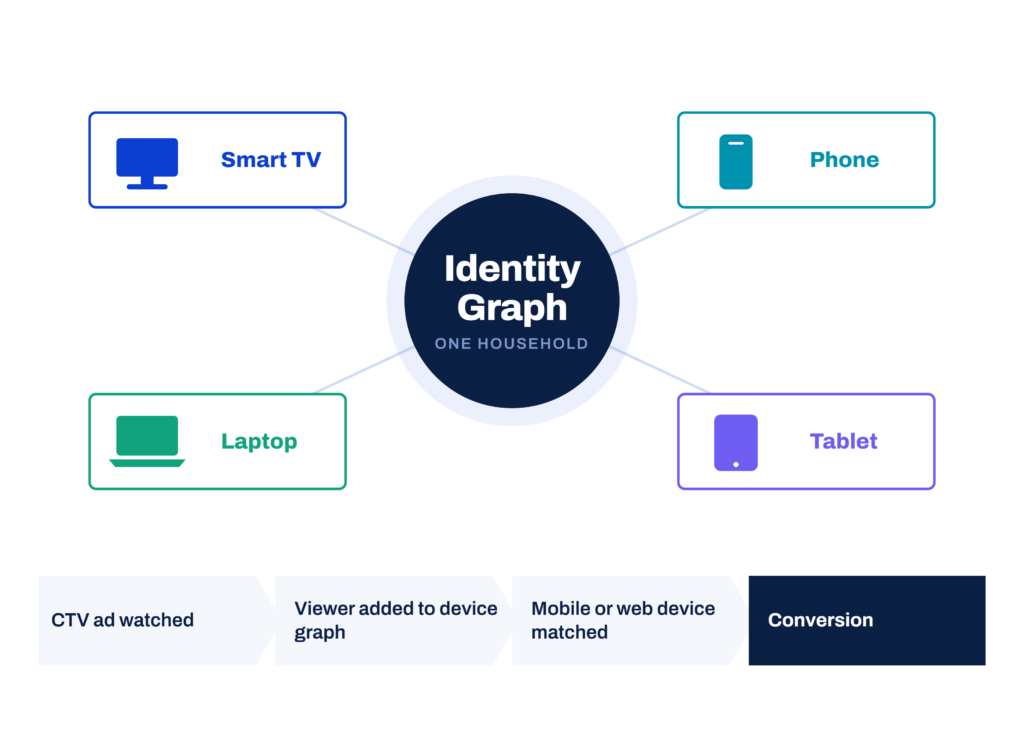
CTV historically operates heavily at the household level.
Identity signals can include:
- IP addresses
- Publisher IDs
- Device IDs
- Login information
- Household information
A simplified measurement path might look like:
CTV Ad Watched → Viewer Added to Device Graph → Mobile/Web Device Matched → Conversion
However, household matching is imperfect.
IP addresses can change, multiple consumers may share a household, and privacy regulations increasingly limit deterministic identifiers.
Device Graphs
A device graph attempts to associate:
- Smart TVs
- Phones
- Tablets
- Laptops
- Other connected devices
with a common individual or household.
Signals can include:
- IP address
- Authenticated login data
- Mobile advertising IDs
- CTV device identifiers
- Publisher first-party IDs
- Household information
- CRM data
Device graphs provide an important connective layer between television exposure and downstream conversion activity.
ACR Targeting and Measurement
Automatic Content Recognition, or ACR, technology embedded within many smart televisions can identify programming and advertising displayed on a television.
ACR can support:
- TV exposure measurement
- Competitive conquesting
- Viewing-based audience creation
- Incremental reach analysis
- Frequency analysis
- Content-viewing segmentation
Companies such as iSpot and Samba TV participate in this ecosystem.
Content and Context
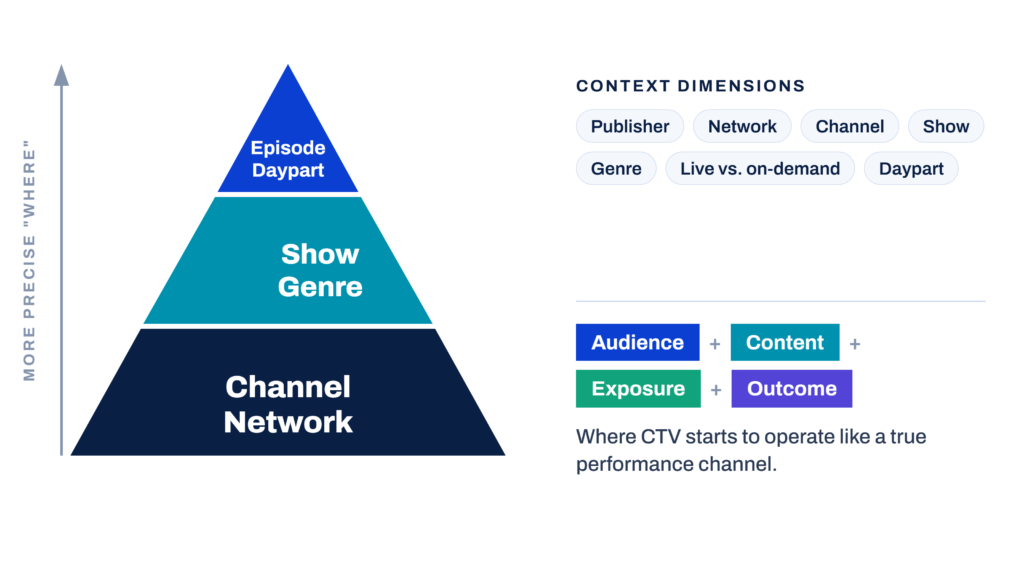
CTV measurement should increasingly evaluate where an advertisement ran, not simply who supposedly saw it.
Important contextual dimensions can include:
- Publisher
- Network
- Channel
- Show
- Genre
- Live vs. on-demand
- Sports league
- Sporting event
- Content rating
- Daypart
- Episode
- Content category
For performance buyers, this creates an additional optimization layer.
Rather than simply determining:
CTV generated a $40 CPA
advertisers should ultimately be able to understand whether certain:
- Publishers
- Shows
- Genres
- Audiences
- Devices
- Contextual environments
generated better incremental performance.
The combination of:
Audience + Content + Exposure + Outcome
is where CTV starts to operate more like a true performance marketing channel.
However, CTV data remains imperfect. Not all inventory is consistently labeled, and not every signal makes its way back to the buyer.
Part VI: Other Important CTV Considerations
Transparency
CTV can generate an enormous amount of data.
However, only a portion of that information may actually be passed through the advertising ecosystem.
Transparency can be limited because of:
- Privacy concerns
- Publisher policies
- Pricing arrangements
- Television rights
- Technical capabilities
- Platform restrictions
Advertisers should first determine which signals are actually important to their campaign rather than trying to collect every possible data point.
Omnichannel Advertising
Many advertisers operate across multiple marketing channels.
When selecting a buying platform, it is important to understand the campaign’s primary goal.
CTV is often most effective when the strategy is built specifically around television.
Combining CTV into a broad omnichannel buying platform can sometimes make campaign execution or measurement more difficult because the platform may not be optimized specifically for television.
Ad Servers
Ad servers provide the infrastructure required to serve advertisements across television publishers and channels.
Most buyers do not interact directly with supply-side ad servers.
However, ad servers influence:
- Where advertisements appear
- How advertisements enter the bidstream
- Placement within programming
- Placement inside an ad pod
- Commercial-break structure
They are therefore an important part of the underlying CTV ecosystem.
Creative
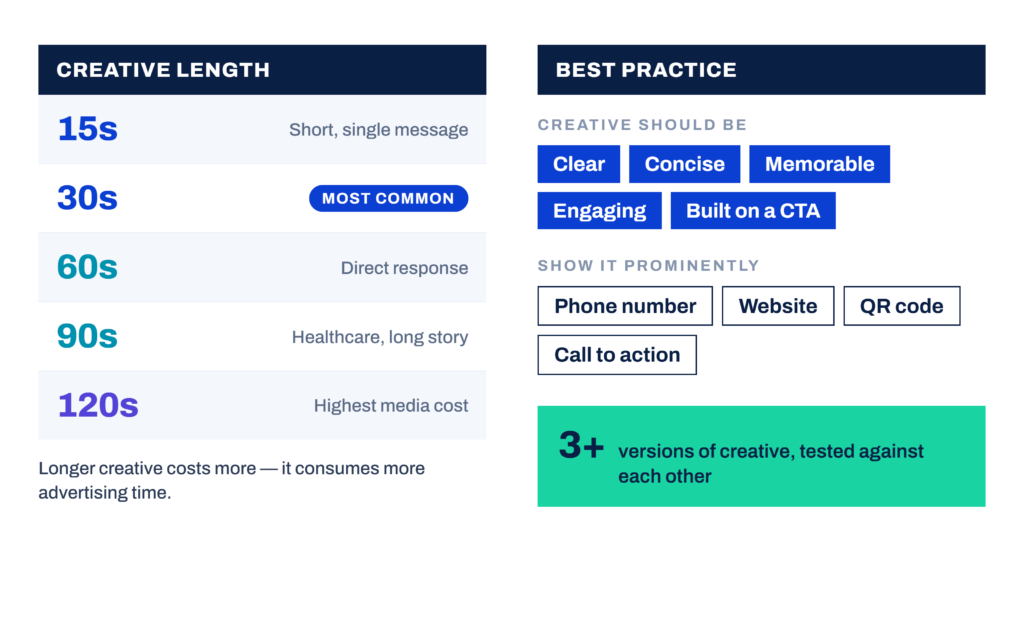
Creative is one of the most important components of a successful CTV campaign.
Advertising should generally be:
- Clear
- Concise
- Memorable
- Engaging
- Focused on a call to action
When appropriate, advertisers should consider prominently including:
- Phone numbers
- Websites
- QR codes
- Calls to action
Creative Length
CTV advertisements commonly range from:
- 15 seconds
- 30 seconds
- 60 seconds
- 90 seconds
- 120 seconds
Thirty-second advertisements are common.
Healthcare and direct-response advertisers frequently use 60- to 90-second advertisements.
Longer advertising typically costs more because it consumes additional advertising time.
Creative Testing
Advertisers should continually test different creative approaches.
We generally suggest creating at least three versions of creative and comparing their performance.
Part VII: The Ultimate CTV Buyer Handbook
Evaluating a Streaming TV Strategy
Before launching a CTV campaign, answer the following questions.
What Is Your Campaign Goal?
Potential goals include:
- Awareness
- Conversions
- New customer acquisition
- Incrementality
What Is Your Budget?
Make sure there is enough budget to meaningfully test the campaign.
Suggested starting points:
- Local campaign: approximately $15,000 minimum
- National campaign: approximately $30,000 minimum
- Ideal testing budget: approximately $50,000
How Will You Measure Success?
Determine:
- What measurement metrics will you use?
- Which measurement company will you use?
- What represents a conversion?
- How will you evaluate incrementality?
What Inventory Do You Want to Buy?
Consider whether you want:
- Efficiently priced inventory
- Large tent-pole events
- Live sports
- Premium publishers
- Specific networks
- Specific shows
- Broad audience reach
Do Premium Publishers Matter?
Determine whether you specifically want environments such as:
- Hulu
- Peacock
- Netflix
or whether your priority is finding your target audience regardless of publisher.
CTV is not Meta or Google.
Television requires a television-specific strategy, but it can be an extremely effective way to expand a brand.
Evaluating a DSP, Trading Platform or Agency
Before selecting a partner, ask:
Service and Support
- How much support will they provide?
- Is the platform self-service or managed service?
- Who will actually manage the campaign?
Pricing
- How is the campaign priced?
- What CPM should you expect?
- What additional platform or management fees exist?
Measurement
- Which measurement platforms are supported?
- How much reporting will you receive?
- Can campaign performance be connected to business outcomes?
Creative
- Do they provide creative services?
- Can they help develop or test creative?
Transparency
- What inventory-level transparency is available?
- Can you see publishers?
- Can you see channels?
- Can you see shows?
- Can you identify live sports?
Not having access to every individual content signal does not automatically mean the campaign will be ineffective.
What matters is determining which information is essential for your campaign goals and making sure your buying and measurement strategy is designed accordingly.
Frequently Asked Questions
What is connected TV advertising?
Connected TV advertising is the practice of buying video ad inventory on internet-connected televisions, including smart TVs, streaming sticks, and gaming consoles. Unlike linear TV, it is bought on a CPM basis through DSPs and SSPs, with addressable targeting, digital-style measurement, and programmatic optimization applied to full-screen television inventory.
What is the difference between CTV and OTT?
OTT describes any video delivered over the internet rather than through cable or satellite, regardless of the device it plays on. CTV is the subset of OTT that renders on a television screen. Someone watching Hulu on a phone is OTT but not CTV. Every CTV impression is OTT, but the reverse is not true.
How much does connected TV advertising cost?
Pricing runs on a CPM basis and shifts with publisher, inventory quality, audience data, and creative length. Budget sizing matters more than rate alone. We generally suggest roughly $15,000 for a local campaign, $30,000 for a national campaign, and around $50,000 for a meaningful test, because thin budgets rarely deliver enough scale to read performance.
How is connected TV advertising measured?
Viewers cannot click a television ad, so measurement depends on identity resolution rather than direct response signals. Buyers connect exposure to outcomes through household matching, cross-device attribution, and incrementality testing. Common approaches include marketing mix modeling, view-based attribution, and call tracking. The right method depends on the conversion event and the first-party customer data available.
What does an ad curation platform do in connected TV advertising?
An ad curation platform sits between SSPs and DSPs, shaping supply so buyers reach the inventory they actually want. Curation surfaces higher-quality publishers, builds specific Deal IDs, and reduces unnecessary bidstream traffic. Our Ichiro platform works across SSPs rather than a single one, so traders can compare supply paths instead of accepting whatever one connection provides.